On Basque theatre & drama
To give some context to the reality of Basque theatre, and more specifically theatre in Euskera, the Basque language, it is first necessary to understand the complex political and administrative reality determining the situation of Basque speakers.
The Basque language is used throughout the Basque nation, or Euskal Herria, a historical and cultural entity which is nevertheless not a political entity, since it is made up of seven territories which legally belong to two States, Spain and France. Moreover, the three territories in the French State do not even form their own département, but are located in the Pyrénées-Atlantiques département, in the Nouvelle-Aquitaine region. Furthermore, the four territories belonging to the Spanish State are divided into two Autonomous Communities: the Basque Country and Navarra. This reality is decisive because policies relating to the Basque language and culture differ from territory to territory. It also complicates analysis and the extraction of data on the overall reality of Basque dramaturgy.
Simultaneously, however, this also partly explains why Basque theatre (and especially theatre performed in Euskera) has historically been characterised as committed theatre, theatre which addresses social and political issues, constantly alert and scrutinising events in the society around it.
One of the major difficulties faced by theatre in Euskera is that it requires a Basque-speaking audience, i.e. an audience capable of understanding the language at an advanced level. Everyone speaks and understands French or Spanish (depending on the Basque territories), but not everyone speaks or understands Euskera. This is an obvious disadvantage at a competitive level which affects production and requires a greater commitment because, under equal conditions, economic logic tends to seek greater profitability. On the other hand, there is also a strong commitment to theatre in Euskera, driven by artists, companies, producers, theatres and institutions wishing to invest in productions in Euskera, despite the difficulties involved. It is most probably for the same reason that the Basque-speaking community is also more active in terms of attending cultural events than non-Basque speakers. In a participation survey by the Basque Observatory for Culture (Behatokia), those who take part in cultural activities in Euskera (22.9%) were asked what motivates them to do so. Support for local culture and for Euskera is the main reason: 45.7%. In other words, there is a conscious and voluntary desire to build community and sustain culture in Euskera.
Among the general audience of performing arts, 29.7% attended a theatre performance in Euskera in 2025. This represents an increase of five points compared to the figure for 2018 (24.7%). Considering only Basque speakers who are spectators of performing arts, six out of ten (59.7%) went to a theatre performance in Euskera. In this case, the increase compared to 2018 is ten points (49.5%). Of the total population, 16.9% attended a play in Euskera at the theatre. Thus, there has been a decrease of one point compared to 2018 (17.8%). A linguistic gap therefore exists, and knowledge of Euskera almost completely determines participation in cultural activities in Euskera. It is therefore the variable which establishes the greatest differences. However, the various characteristics of each cultural practice also play a role. The more textual the cultural practice is, the more difficult it becomes for those who have a limited command of Euskera.
As a language, Euskera is facing a crucial juncture. Extensive work has been ongoing over the last 50 years, after 40 years of darkness due to the Franco dictatorship which banned communication in Euskera. The data now indicate that knowledge of the language has considerably expanded. 31.1% of the population is Basque-speaking, i.e. they speak good or quite good Euskera. This represents an increase of more than one point compared to 2018. The younger the population, the greater the proportion of Basque speakers: 64.0% among people aged 15 to 24, and 19.4% among those over 64.
Usage of the language has been decreasing in recent years, however. Globalisation and the influence of technology in everyday life, which favours dominant languages such as English, Spanish or French, are reducing the spaces for minority languages. In addition, there are other challenges of a demographic nature. The population of the Autonomous Community of the Basque Country (Euskadi) on 1 January 2025 stood at 2,218,210, which represents an increase of 10,203 inhabitants compared to 2024, 0.5% more. Growth is concentrated in the population of foreign nationals, a total of 217,489 foreign residents in the Autonomous Community of Euskadi, 9.9% of the total. These people, in most cases, seek the “practical” integration offered by Spanish, which is also reinforced by political and judicial decisions penalising Euskera. This context of difficulty for the Basque language obviously poses difficulties for Basque theatre.
According to data presented by the Basque Government, throughout 2025 a total of 22,425 cultural activities were programmed in Euskadi (Autonomous Community of the Basque Country) across its three territories: Araba, Bizkaia and Gipuzkoa, which represents an increase of 8.5% compared to 2024. In day-to-day terms, Euskadi hosted an average of 61 cultural activities per day, distributed across the territory. Cultural programming has increased by more than 20% since 2023, confirming a stable trend and the strength of the Basque cultural system, sustained through collaboration among institutions, programming entities, performers and audiences. Thanks to these figures, the Basque Country is ranked fifth in the Spanish State in terms of cultural offer, and fourth in attendance and revenue.
In addition, almost 40% of this cultural programming is in Euskera, boosting its role as a language of creation and performance. At the same time, more than 40% of live arts activities are free, guaranteeing access to culture for diverse audiences. By genres, concerts predominate, with 5,898 in 2025, followed by theatre and circuses, which together account for 4,612 performances. Euskera accounts for almost 40% of performances, of which a significant number target children and family audiences.
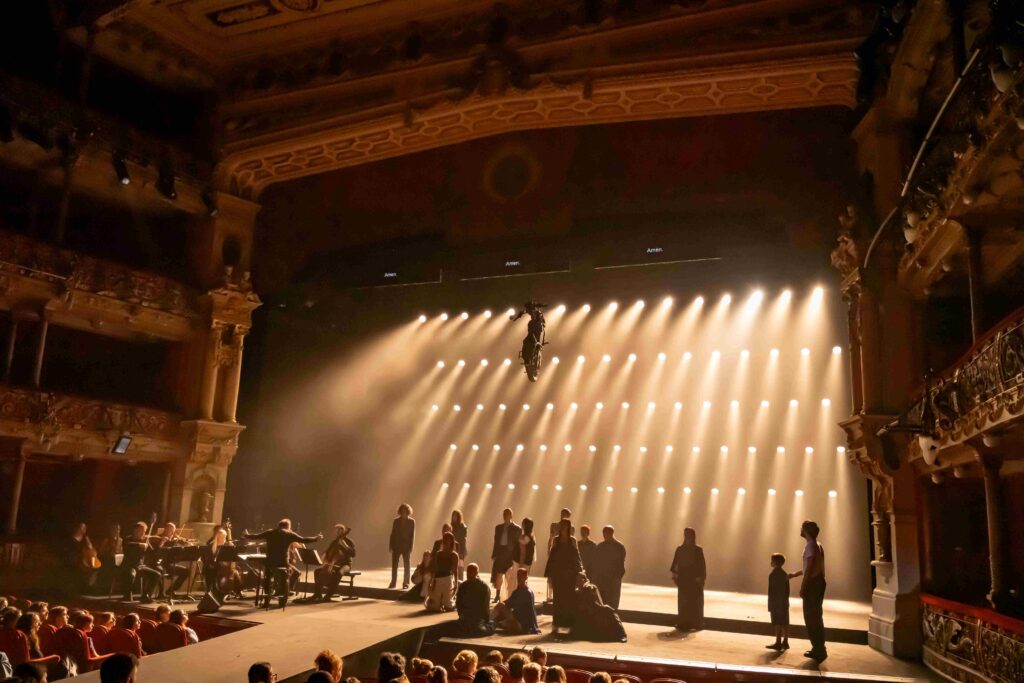
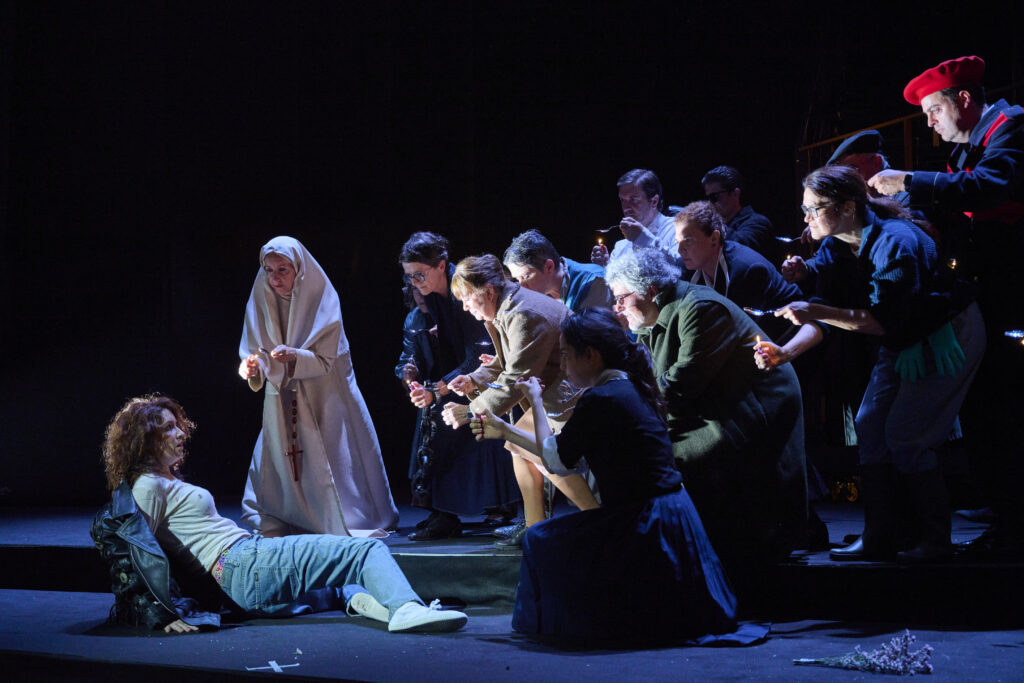
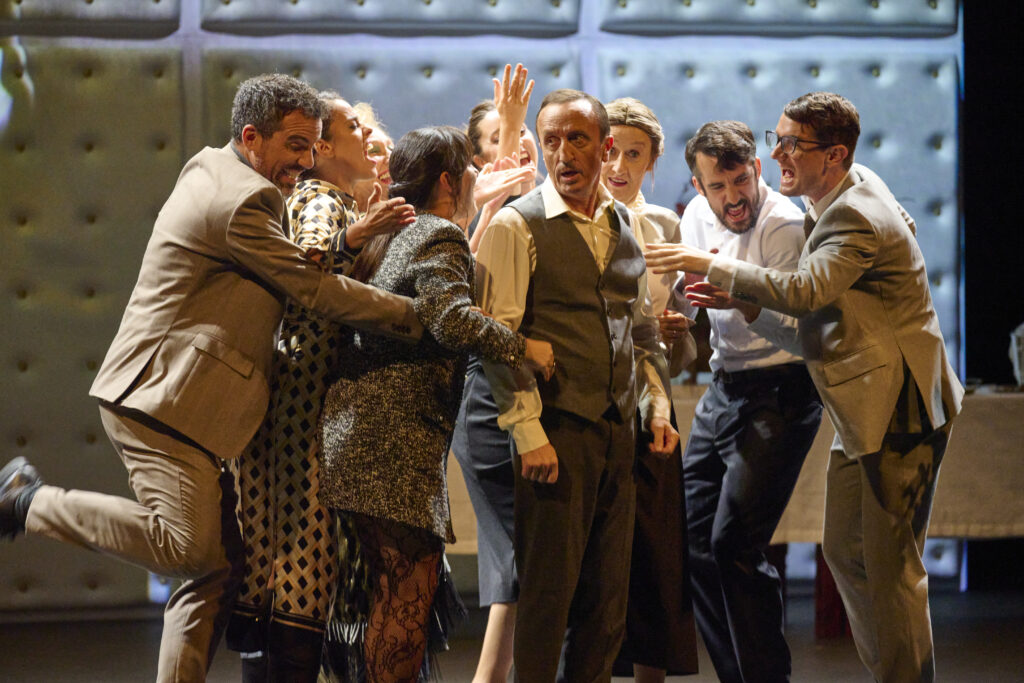
Bizkaia is noteworthy in terms of the volume and diversity of its cultural programming, driven by the clout of its capital city, Bilbao. With the highest total number of activities, Bizkaia accounts for 45% of the overall programming with 10,136 activities, consolidating a continuous cultural offer throughout the year and a strong network of cultural venues and agents. This is where the Arriaga Theatre holds a privileged position as the main theatre in Bilbao and one of the leading theatres in the entire Spanish State, thanks to an extremely comprehensive programme and its work in arranging its own productions, in which the promotion of theatre in Euskera is one of its hallmarks. Productions such as Obabakoak or Moto-Membra Jesu Nostri, which have brought Euskera to the stage in countries such as Germany or Slovenia, are just two examples.
In the years ahead it will be important to continue to build internal collaboration networks among the entire Basque community and also externally, such as, for example, that created through the DoSEL project, which connects Basque language to other linguistic realities from which to learn and with which to share experiences in order to continue promoting and showcasing performing arts in our respective languages. In this sense, and specifically regarding the Basque language, a collaboration like the one established within the framework of DoSEL between the Arriaga Theatre and the Etxepare Basque Institute, the public institution that works to promote the presence and visibility of the Basque language and contemporary Basque art internationally, is particularly interesting. Looking ahead, it seems essential to continue exploring these kinds of synergies.
Facts on Basque theatre & dramaturgy:
- The Basque Observatory for Culture (Behatokia) lists a total of 22,425 events in Euskadi, including these 13 typologies: Concerts, Theatre, Exhibitions, Dance, Bertsolaritza rhyming poetry, Fiestas, Conferences, Fairs, Cinema and audiovisuals, Courses-workshops, Competitions, Festivals and cycles, and others. This represents an increase of 8.5% compared to 2024.
- 39.5% of the 22,425 events were held in Euskera, 4% in Spanish, 9.9% mixed languages, 8.9% had no language, 6.1% were in English, 2.6% in other languages, and 1.8% unknown.
- Theatre and circuses account for 20.6% of the total number of events programmed with 4,612 performances, making this the second genre after concerts, which account for 26.3% with 5,898 performances. Both genres increased compared to the previous year.
- 46.3% of the 4,612 performances were held in Spanish, 39.7% in Euskera, 5% had no language, 2.5% mixed languages, and 1.1% other.
- There were 927 dance performances in 2025, 4.6% more than the previous year.
- In 2024 the Basque Country accounted for 5.4% of performing arts across the entire Spanish territory, 6.8% of the audience, and 5.2% of the revenue. Thus, Euskadi is the fifth Spanish autonomous community in terms of results obtained in cultural offer, and is ranked fourth in consideration of attendance and revenue
More information on Basque theatre and drama in >> this DoSEL document.
Photos: Teatro Arriaga