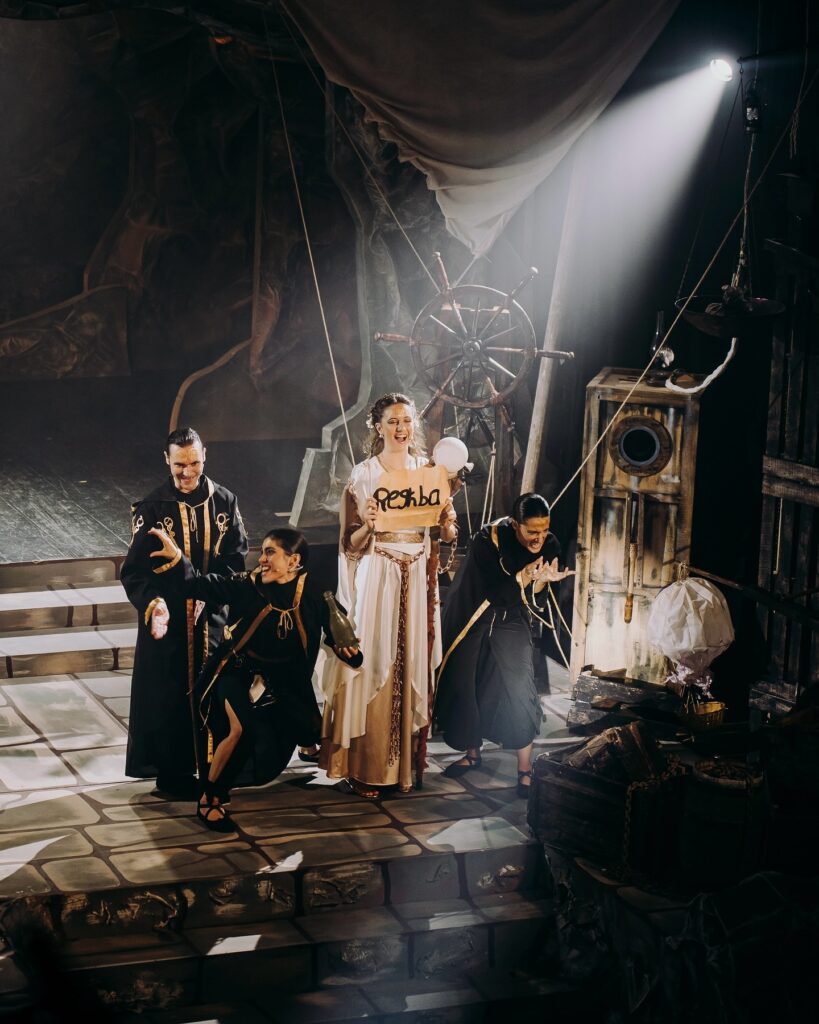
The Maltese drama scene is energetic, diverse, and expanding. A youth finding his ground. It is anchored in local language and stories, enriched by international influences, and supported by a mix of professional institutions and grassroots creativity.
Teatru Malta occupies a central role in the contemporary Maltese drama scene as the national theatre company. While it has commissioned and produced theatre since its founding in 2016, an important recent development has been the establishment of a dedicated actors’ troupe, marking a new phase in its evolution. Locally, most of the practitioners juggle theatre with other jobs, which affects long-term artistic development.
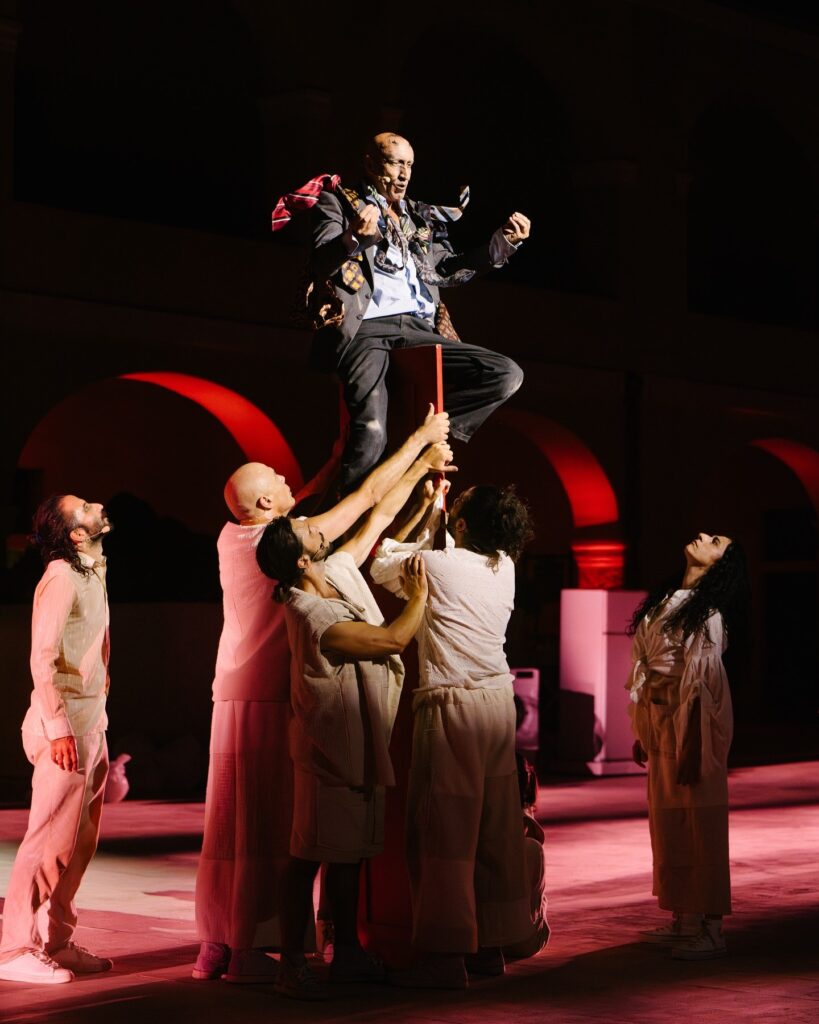
Ġaħan, by Teatru Malta and the National Agency for Performing Arts (NAPA), was staged to mark the 100th anniversary of the birth of Francis Ebejer, widely regarded as one of Malta’s most influential modern playwrights, giving the production national cultural weight. It was a contemporary adaptation of Ebejer’s classic Il-Ġaħan ta’ Binġemma, bringing a foundational work of Maltese theatre back into the spotlight for a new generation, after almost 40 years. Teatru Malta has been at the forefront of producing adaptations such as Il-Fidwa tal-Bdiewa.
Teatru Manoel, one of Europe’s oldest working theatres, remains a cornerstone of Maltese performing arts. Its historic stage continues to host a range of productions from classical plays to contemporary comedies and pantomimes; in fact, in 2025, it hosted more than 50 productions.
The Malta National Centre for Creativity, also known as Spazju Kreattiv, plays a critical role in supporting theatre development, commissioning new works and curating experimental performance programmes. Festivals like Żigużajg International Arts Festival for Children & Young People and Skeċċ, a short-play festival, exemplify its mission to incubate new theatrical talent and present diverse artistic voices. Another notable short-play festival, but on a smaller scale, takes place in Cospicua, where people can walk from one play to the next.
A breakout solo theatre success of 2025 is Mid-Djarju ta’ Student fi Skola tal-Knisja, starring Jamie Cardona. This autobiographical comedy follows his teenage experiences in a church school, bringing his mischievous diary to life with humour and sharp character work. It has enjoyed extended runs and strong ticket sales at venues like Theatre Next Door through late 2025, underscoring its popularity with local audiences. Il-Każin tal-Imqarbin, a queer musical written by Luke Saydon, was one of the year’s most talked-about productions. Set in the 1980s and inspired by real queer experiences, the show in Malta sold out its run at the Valletta Campus Theatre and garnered praise for its powerful storytelling and vibrant performances. It has received major recognition at Malta’s national arts awards. At the 2025 Arts Awards, it won Best Production: Theatre and Best Production: Music, highlighting both its theatrical impact and its original musical score. The show was praised for its powerful portrayal of Maltese queer history and artistic excellence, making it one of the year’s standout cultural productions.
These are remarkable because Malta’s population is small, so productions often struggle to reach large audiences or sustain long runs. This makes it harder for shows to tour or be revived.
Maltese theatre is still under-represented in major international circuits, despite the high quality of its work, but one of the most striking examples of Maltese drama gaining international attention is the work of Malcolm Galea. A prolific playwright, actor and director, Galea’s work spans comedy, pantomime, family theatre and innovative original pieces.
Galea’s co-written play, The Trials of Magnus Coffinkey, achieved significant success at the Brighton Fringe Festival, winning the Fringe Review Outstanding Theatre Award in 2024, selected from hundreds of acts. This accolade and other international recognitions, including fringe awards for solo shows such as Plastic & Chicken Bones, highlight how Maltese writers and performers are not only active locally but are increasingly visible on the global stage.
One of the biggest challenges in Malta is that popular venues are heavily booked and programming calendars fill up months, sometimes years in advance. This leads to overlapping productions scheduled within the same narrow time frames. Since Malta’s theatre-going audience is relatively small and largely shared across companies, shows often end up competing directly for the same spectators, critics, and media attention.
At the same time, the situation reflects something positive, that there is a lot of theatre being made. The demand for venues stems from the scene’s vibrancy. Personally, I still feel that theatre in Malta functions less as casual consumption and more as a deliberate social outing, and there is nothing wrong with that. It is valued, discussed, and remembered, but it still competes hard for attention amid a busy cultural and social calendar.