

A short interview with the Estonian playwright PIRET JAAKS
𝐏𝐢𝐫𝐞𝐭 𝐉𝐚𝐚𝐤𝐬 is an Estonian writer, playwright, and dramaturg. She holds a BA in Theatre Studies from the University of Tartu and a PhD in Theatre Arts from the Estonian Academy of Music and Theatre. Jaaks is known for her bold and imaginative writing, often exploring social issues through sincerity, humour, and poetic imagery. Her work spans multiple genres – from plays and prose to children’s literature and television scripts. In 2019 she made her debut as a director with a production Beautiful People (Ilusad inimesed) at Tartu Uus Theatre.
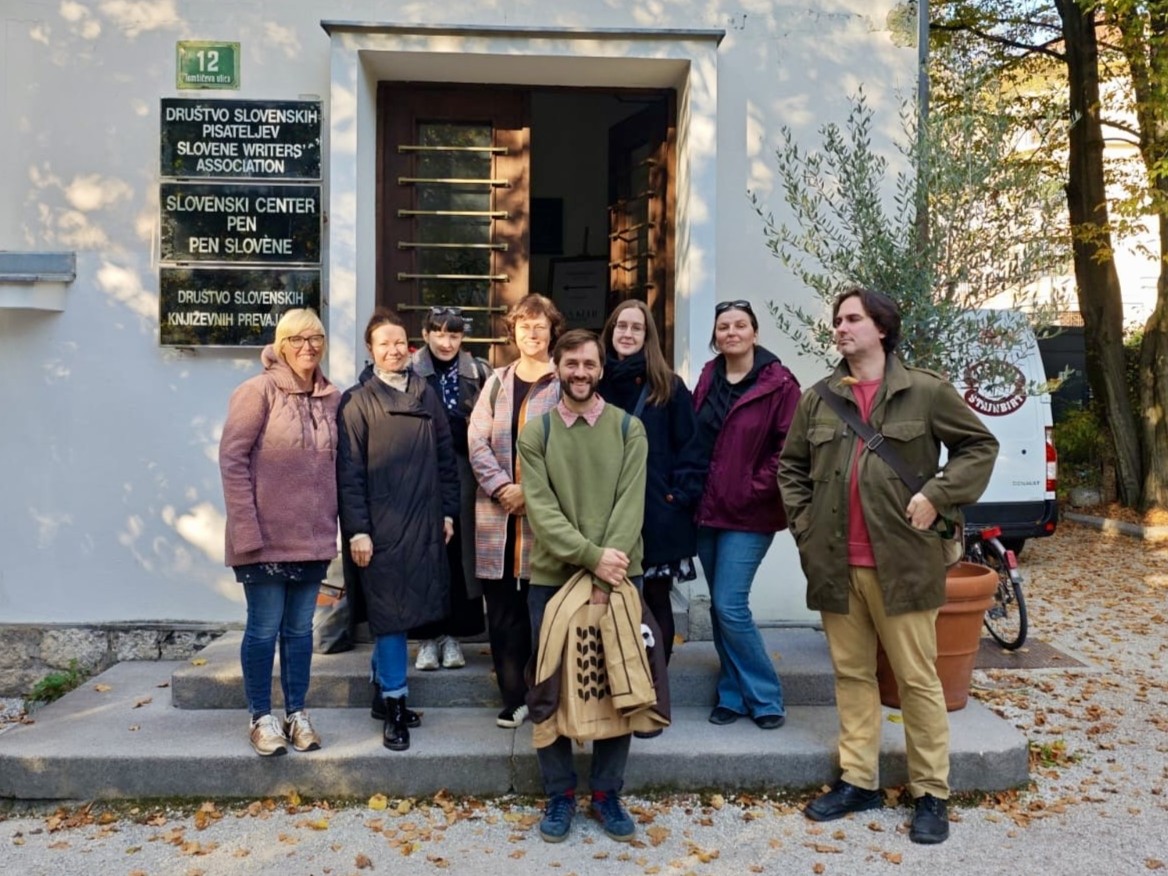
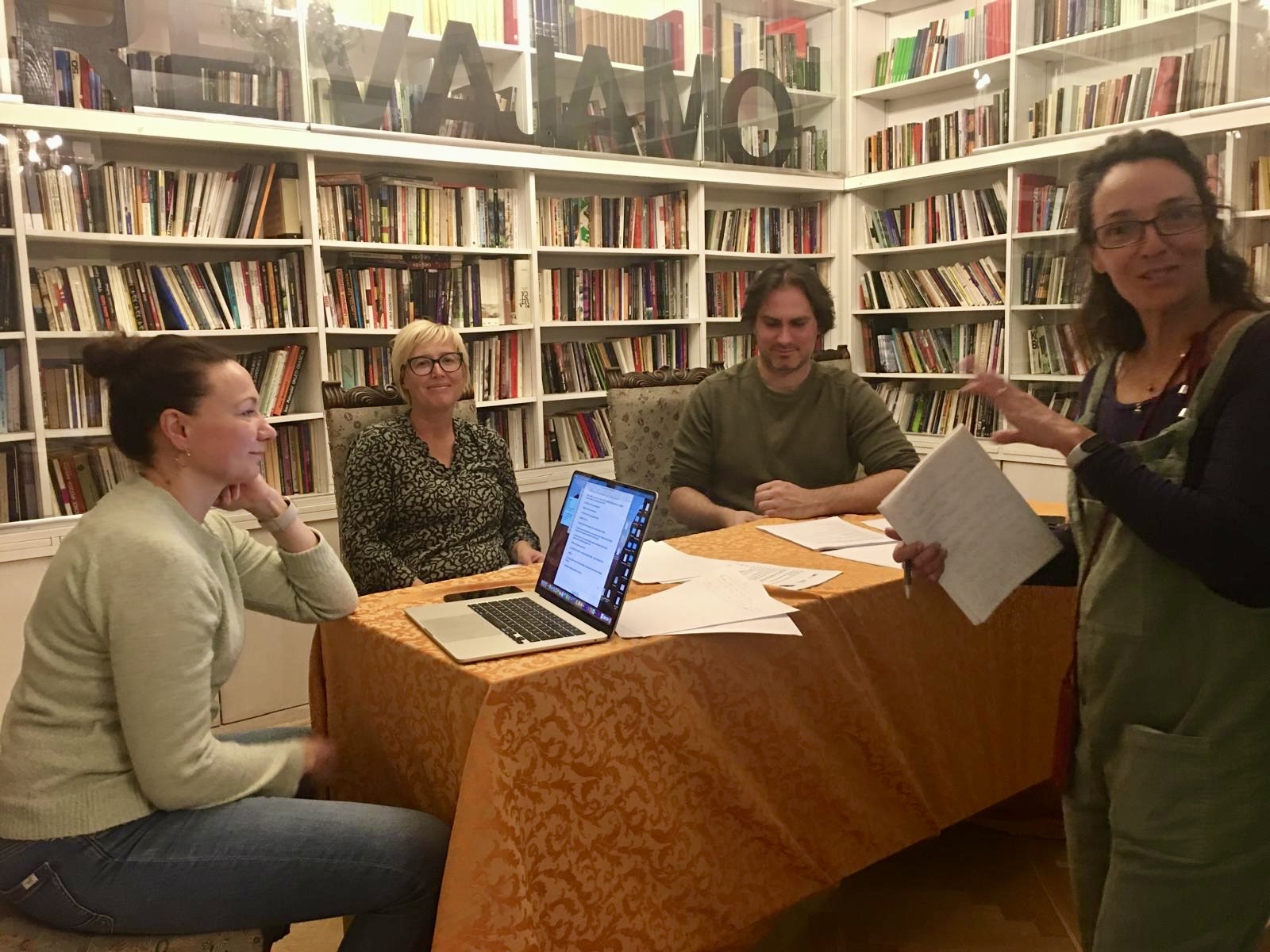
In the interview 𝐏𝐢𝐫𝐞𝐭 𝐉𝐚𝐚𝐤𝐬 talks about her work and her experience within the DoSEL – Drama of Smaller European Languages project. In this short interview, recorded during the Estonian-Slovenian translation workshop in Ljubljana in October 2025, she reflects on why projects like DoSEL matter, what happens when a play moves between languages, and how translation can open unexpected questions. Her play 𝐂𝐚𝐧 𝐀𝐧𝐢𝐦𝐚𝐥𝐬 𝐂𝐨𝐮𝐧𝐭?, a dystopian text set in the near future, is being translated as part of the DoSEL project.
>> Press for the video interview HERE <<
Or read the short interview below in English and Estonian.
In English
Can you introduce yourself in a few words?
My name is Piret Jaaks. I am a playwright, and I also write novels and children’s books.
Why are such projects important? What do you expect from the DoSEL – Drama of Smaller European Languages project?
Such projects are important above all so that people can meet. So that authors and translators can get together and learn about each other’s worlds, feel comfortable with each other. And what I hoped for most from the DoSEL project was the opportunity to learn how translators think when they translate an author’s text.
Tell us a few words about your play.
My play, which is being translated as part of this project, is called “Can Animals Count?”. It is a dystopia set somewhere in the future, which actually says a lot about the time we are living in now – when an ultra-conservative utopian party has come to power and is implementing laws that oppress people.
What do you think is the biggest challenge for translators in this play?
When we worked with the translator, the most interesting thing was that there are no genders in Estonian, but there are in Slovenian. So when there was a character named Doctor Andalusia, the translator asked if they were a man or a woman, and I said that it didn’t matter at all – they are a doctor. But since in Slovenian they definitely have to be either a woman or a man, we discussed at length who they should be, and I told the translator that she has to choose.
In Estonian:
Minu nimi on Piret Jaaks. Ma olen näitekirjanik, ühtlasi kirjutan ka lasteraamatuid ja romaane.
Miks on sellised projektid olulised? Mida ootad DoSEL – Drama of Smaller European Languages projektist?
Sellised projektid on ennekõike olulised, et inimesed saaksid kohtuda. Et saaksid kokku autorid ja tõlkijad ning õpiksid üksteise maailmu tundma, tunneksid ennast üksteisega mugavalt. Ja mida mina lootsin DoSEL projektist, oli just ennekõike võimalus saada tundma seda, kuidas tõlkijad mõtlevad, kui nad tõlgivad autori teksti.
Räägi paari sõnaga oma näidendist.
Minu näidend, mida selle projekti raames tõlgitakse, kannab nime “Kas loomad oskavad loendada?”. See on düstoopia, mis toimub kuskil tulevikus, mis tegelikult räägib väga palju selle aja kohta, kus me praegu oleme – kui võimule on saanud äärmuskonservatiivne utoopiline partei, kes rakendab seaduseid, mis suruvad inimesi alla.
Mis on sinu hinnangul tõlkijatele selle näidendi juures kõige suurem väljakutse?
Kui me töötasime koos tõlkijaga, oli kõige huvitavam, et eesti keeles ei ole sugusid ja sloveenia keeles on. Kui seal oli üks tegelane, kelle nimi oli doktor Andaluusia, siis küsis tõlkija, kas ta on mees või naine, ja mina ütlesin, et see ei oma üldse tähtsust – ta on arst. Aga kuna sloveenia keelde tuleb ta kindlasti panna kas naise või mehena, siis me arutasime pikalt, kes ta peaks olema, ja ma ütlesin tõlkijale, et tema peab valima.

„Euroopa keel on tõlkimine.“ Umberto Eco

Email: info@tsd.si
Address: Prešeren Theatre Kranj, Glavni trg 6, 4000 Kranj, Slovenia
Funded by the European Union. Views and opinions expressed are however those of the author(s) only and do not necessarily reflect those of the European Union or the European Education and Culture Executive Agency (EACEA). Neither the European Union nor EACEA can be held responsible for them.
